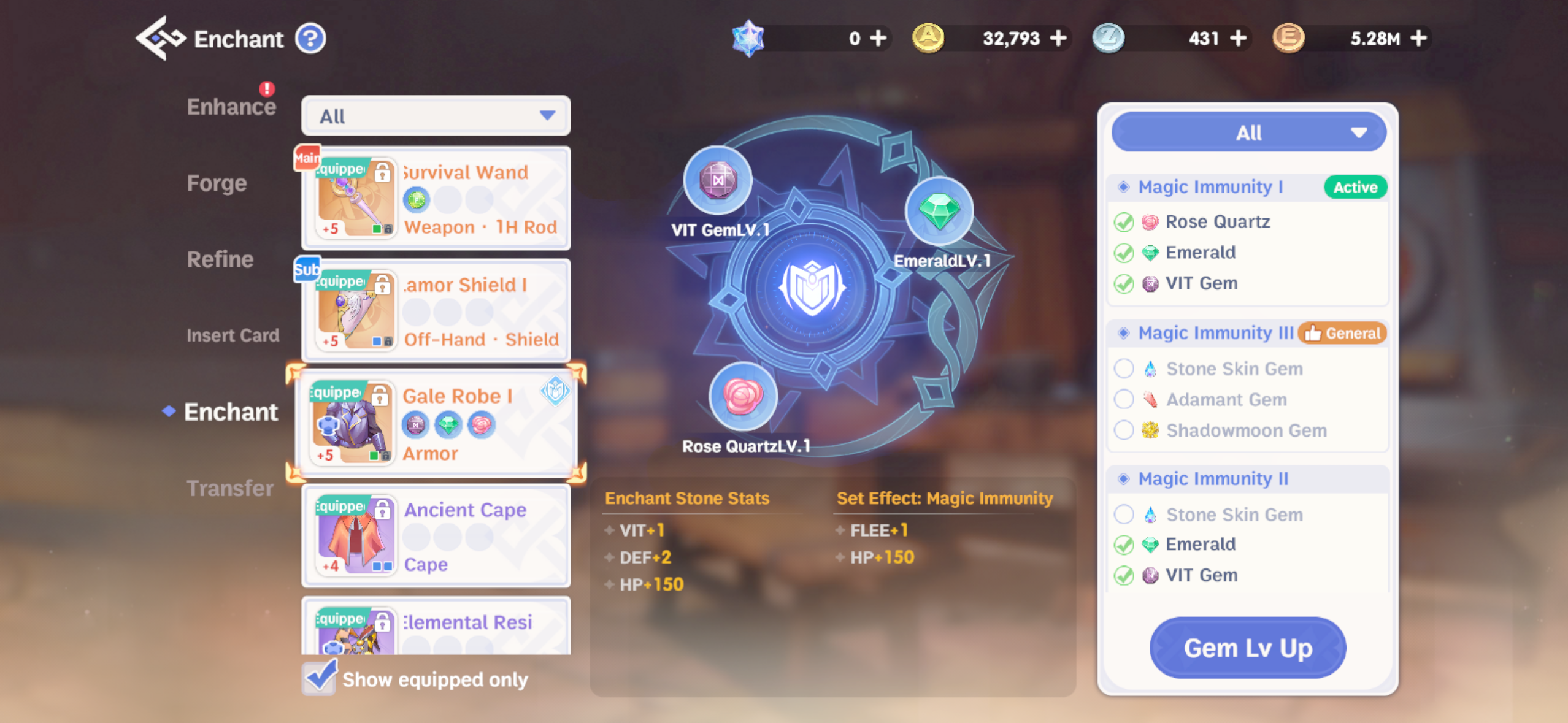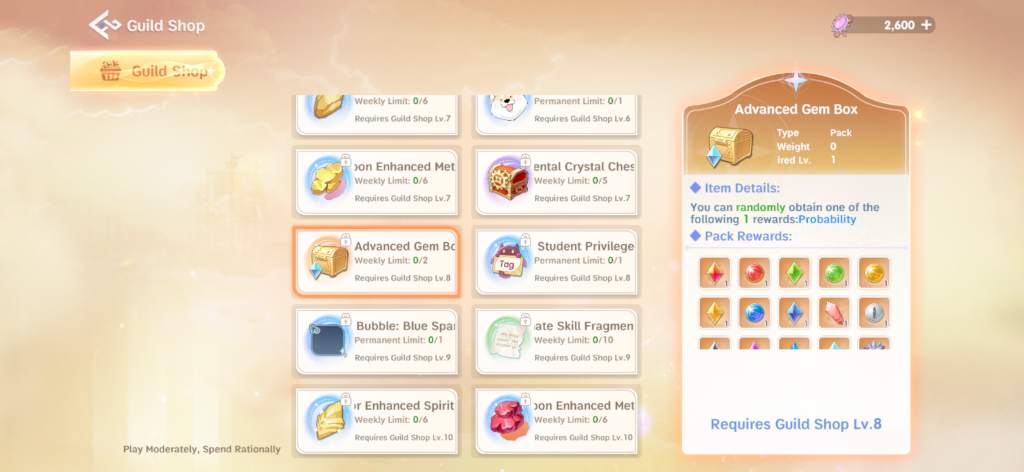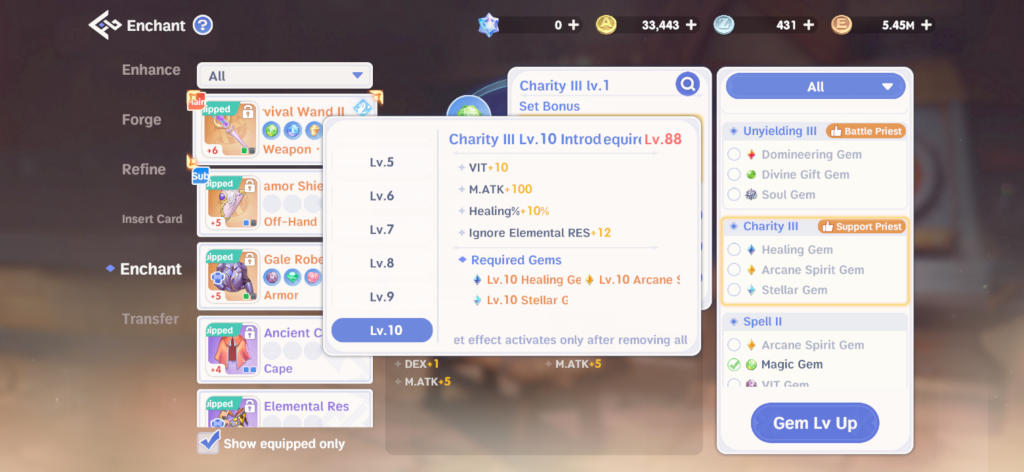
Forging is how you get most of your gear in Ragnarok: The New World. You do not buy weapons and armor from an NPC shop. You forge them. The system uses molds, crystals, and embers to produce random equipment from a level-gated pool.
This guide covers the materials you need, the two forging modes, the mold level brackets, and the equipment trait system that can turn an ordinary piece of gear into a build-defining item.
Key takeaways:
- Forging is your main source of gear from Lv 25 through endgame. The material costs are straightforward: Forging Crystals from the Points Shop or Pass Shop, mold boxes from the Supply Shop for Zeny, and Godforged Embers from Arena Coins or Starstones when you are ready to hunt orange traits.
- The trait system is where forging gets deep. Armor and cape share one universal pool across all levels, so forge those cheap. Weapons and accessories use class-specific pools that change by bracket, so plan your transfers carefully. A Lv 40 weapon trait transferred to a Lv 70 weapon can give you effects that weapon could never roll on its own.
- The pity system keeps the grind honest: 30 forges guarantees a purple trait on common forge and an orange trait on enhanced forge. The wishlist pity at the third miss makes targeted trait hunting possible.
Forging Materials
Every forge attempt needs two things: a Forging Crystal and a Forge Mold.
Enhanced forging adds a third material: the Godforged Ember.
Forging Crystal (Blue)
The basic crystal consumed in every forge attempt both common or enhanced.
Where to get?
| Source | Price |
|---|---|
| Points Shop | 4 Assist Coin |
| Pass Shop S1–S6 | 10 Pilgrimage Token |
| Return Shop | 20 Return Points |
Forge Mold Choice Boxes
Molds determine what level bracket you forge in. Each box gives you a mold for a specific equipment slot at that level.
| Mold Level | Supply Shop (Zeny) | Return Shop | Novice Shop |
|---|---|---|---|
| Lv 25 | 30,000 Zeny | — | — |
| Lv 40 | 40,000 Zeny | 200 Return Points | 40 Novice Points |
| Lv 55 | 80,000 Zeny | 400 Return Points | 80 Novice Points |
| Lv 70 | 120,000 Zeny | 600 Return Points | — |
| Lv 80 | 120,000 Zeny | 800 Return Points | — |
| Lv 90 | 120,000 Zeny | 800 Return Points | — |
The mold boxes are blue quality.
Molds are slot-specific. There are separate molds for weapon, armor, cape, shoes, accessory, and off-hand.
Godforged Ember (Orange)
Used only in Enhanced Forge. This item increases the chance of obtaining top-tier Special Skill gear.
| Source | Price |
|---|---|
| Points Shop | 50 Arena Coin |
| Starstone Shop | 50 Bind Rune Starstone |
| Pass Shop S1–S6 | 50 Pilgrimage Token |
Without a Godforged Ember, you cannot get orange-quality equipment traits.
Common Forge vs Enhanced Forge
The forge has two modes:
Common Forge:
- Uses Forging Crystal + Mold.
- Produces blue, purple, or orange gear. Orange gear from common forge almost always comes with a trait. Blue and purple gear have a low chance.
Enhanced Forge:
- Uses Forging Crystal + Mold + Godforged Ember.
- Same gear output, but the Godforged Ember enables orange-quality traits, called epic special skills.
You do not choose which specific item you get. The forge pulls randomly from all gear in that slot and level bracket. A Lv 40 bow mold might give you an Elverbow, a Hunter Bow, or another bow.
Mold Level Brackets
Each mold level corresponds to the level your character needs to equip the resulting gear.
| Bracket | Levels | Notes |
|---|---|---|
| 25 | Lv 25 gear | Entry-level forged gear |
| 40 | Lv 40 gear | First major upgrade point |
| 55 | Lv 55 gear | Mid-game gear |
| 70 | Lv 70 gear | Late-game gear |
| 80 | Lv 80 gear | Late-game gear |
| 90 | Lv 90 gear | Endgame gear |
The mold boxes for Lv 70, 80, and 90 all cost the same 120,000 Zeny at the Supply Shop. The Return Shop cost increases from 600 to 800 Return Points at the higher brackets.
Molds have weekly purchase limits at the shop.
Equipment Traits
This is the system that makes forging worth the investment. Equipment traits are random skill affixes that appear on forged gear. A good trait can change your entire build.
What Are Equipment Traits
Traits are skill lines that appear randomly during forging. You can see the available purple and orange traits for any piece of gear in the Wishlist menu, the heart icon in the upper-right corner of the forge screen. Pick one trait as your wishlist target.
Traits come in four quality colors:
- Green – lowest tier
- Blue – common
- Purple – rare (epic)
- Orange – legendary (top tier)
Orange-quality gear almost always gets a trait. Blue and purple gear have a low chance.
5.2 Which Slots Get Traits
| Slot | Has Traits? | Trait Pool |
|---|---|---|
| Weapon | Yes | Class-specific, varies by level bracket |
| Armor | Yes | Universal pool (shared with Cape) |
| Cape | Yes | Universal pool (shared with Armor) |
| Accessories | Yes | Class-specific (shared with Weapon pool) |
| Shoes | No | — |
| Off-Hand (Shield) | No | — |
Shoes and off-hand cannot get traits.
Weapon Traits: Class-Specific and Level-Gated
Weapon traits come from a class-specific pool. The pool changes by level bracket:
| Bracket | Weapon Levels | Trait Pool |
|---|---|---|
| 1 | Lv 15, 25 | Unique pool |
| 2 | Lv 40, 55 | Unique pool |
| 3 | Lv 70 | Unique pool |
| 4 | Lv 90 | Unique pool |
The traits available at Lv 40/55 are not the same as those at Lv 70 or 90. Each bracket has exclusive traits that do not appear in higher brackets.
Example (Knight): The 40/55 bracket has traits like Thorn Body, Balanced Attack, and Flame Heart. Destroy Charge which makes charge-attacked enemies take increased damage and lowers all their control resistance by 70% and is exclusive to the 40/55 bracket. You cannot get it from a Lv 70 weapon forge.
Armor and Cape Traits are Universal
Armor and cape share one trait pool of about 30 traits. These are mostly defensive or utility effects: percentage elemental resistance, damage reduction, and similar stats.
The pool is identical across all levels. A Lv 25 armor forge pulls from the same trait list as a Lv 90 armor forge. This is the most important efficiency trick in the whole system.
Accessory Traits
Accessories share the weapon’s class-specific trait pool. If you wear two accessories with the same trait name, only the highest-quality version takes effect.
Example (Knight): Getting Dual Sword Dance on an accessory gives 20% bonus block chance. Unyielding Spirit on another accessory gives the Endure skill two charges and a shield worth about 20% of your max HP after using Endure.
Pity System
The forge has two pity counters:
| Type | Trigger | Reward |
|---|---|---|
| Common Forge | Every 30 forges | Guaranteed purple trait (random level) |
| Enhanced Forge | Every 30 forges | Guaranteed orange trait (random level) |
There is also a wishlist pity: if you fail to get your selected wishlist trait two times in a row on a purple or orange trait roll, the third purple or orange trait is guaranteed to be your wishlist trait but at a random level.
rait Levels
Traits have levels that determine the strength of the effect. The level is random when the trait appears.
Trait Strategy: Forge Low, Transfer High
Once a trait is forged onto a piece of gear, its quality and level are fixed. You cannot upgrade a trait.
What you can do is transfer it.
Armor/Cape Strategy
Since armor and cape traits are the same across all level brackets, you should forge cheap low-level gear (Lv 25–39 bracket) to hunt for traits. A Lv 25 mold costs 30,000 Zeny. A Lv 70 mold costs 120,000 Zeny. The trait pool is identical.
When you get a good purple or orange trait on a low-level piece, save it. Transfer it to your Lv 70+ gear later. This cuts your trait-hunting costs by roughly 75%.
Weapon Strategy
Weapon traits are trickier because the pools change by bracket. The strategy works in reverse: if a lower bracket has a trait you want that does not exist in higher brackets, you forge a low-level weapon specifically to get that trait, then transfer it up.
Using the Knight example: if you want Destroy Charge (40/55 bracket exclusive), forge a Lv 40 or Lv 55 weapon until you get it, then transfer the trait to your Lv 70 weapon. Your Lv 70 weapon now carries a trait it could never roll on its own.
Accessory Strategy
Accessory traits are pure luck. You forge accessories as you level, and you keep anything useful. Even a low-level trait that matches your build is worth holding as you might need it later.
Other Sources of Traited Gear
Equipment from in-game activities can also drop with traits already on them.
Tips for Efficient Forging
Do not burn molds early. Molds have weekly purchase limits. If you blow all your Zeny on Lv 25 molds at the start, you will be resource-starved when you unlock higher brackets. Forge enough to get usable gear, then save for the next bracket.
Use the wishlist. Always pick a wishlist trait before forging. The pity system only applies if you have one selected.
Enhanced forging is for traits, not gear. You use common forge for the gear itself. You use enhanced forge (with Godforged Embers) only when you are hunting for orange traits. Do not enhanced-forge just to get a basic orange weapon as the ember is the expensive ingredient, and you want it working toward trait pity.
Keep traits from old gear. Do not throw away a piece of gear with a good trait just because the gear itself is outdated. Transfer the trait first.